Contracts in Islam: Why Every Teaching Arrangement Deserves One
IslamicTeachers.co.za · 2 July 2026
Many of us feel awkward asking for something in writing, especially within the Muslim community. It can feel like a lack of trust, as if asking a respected teacher or a well-meaning parent to sign a document implies we expect them to fall short. But this instinct, however well-intentioned, gets Islam exactly backwards. Writing down agreements is not a departure from Islamic values. It is one of their clearest expressions.
The longest verse in the Quran is about writing down agreements
It surprises many people to learn that the single longest verse in the Quran — Ayat al-Dayn, verse 282 of Surah al-Baqarah — is devoted to the careful documentation of financial agreements. Allah instructs the believers, when they contract a debt for a fixed term, to write it down, to have it witnessed, and not to consider it trivial whether the amount is small or large. If documenting agreements were contrary to trust and brotherhood, it would not occupy this position in the Book of Allah.
"O you who believe, fulfil your contracts"
Surah al-Ma'idah opens with a direct command: fulfil your agreements. And in Surah al-Isra, Allah reminds us that the covenant will be asked about on the Day of Judgement. The Prophet Muhammad ﷺ was known as al-Amin — the trustworthy — before revelation ever came to him, and his teachings return again and again to the sanctity of one's word. The well-known hadith puts it plainly: Muslims are bound by their conditions. When we agree to terms, honouring them becomes a matter of deen, not just courtesy.
Clarity prevents conflict — and protects relationships
Most disputes between teachers and families don't come from bad intentions. They come from assumptions. The parent assumed a missed lesson would be made up; the teacher assumed it was forfeited. The teacher assumed payment at the start of the month; the parent assumed the end. Nobody lied, yet both sides feel wronged — and a relationship built around the Quran itself becomes strained over avoidable misunderstandings. A simple written agreement removes the assumptions before they can do damage. That is precisely the wisdom the Quran points to: documentation is "more just in the sight of Allah, and more supportive as evidence, and more likely to prevent doubt between you."
Paying the teacher fairly and on time is part of the contract
Islam is emphatic about the rights of the one who works. The Prophet ﷺ instructed us to give the worker his wages before his sweat dries. A teacher who has prepared lessons, travelled, and given their time has a right that is due promptly and in full. A written agreement protects that right — and equally protects the family, who knows exactly what they are paying, when, and for what.
What a good teaching agreement covers
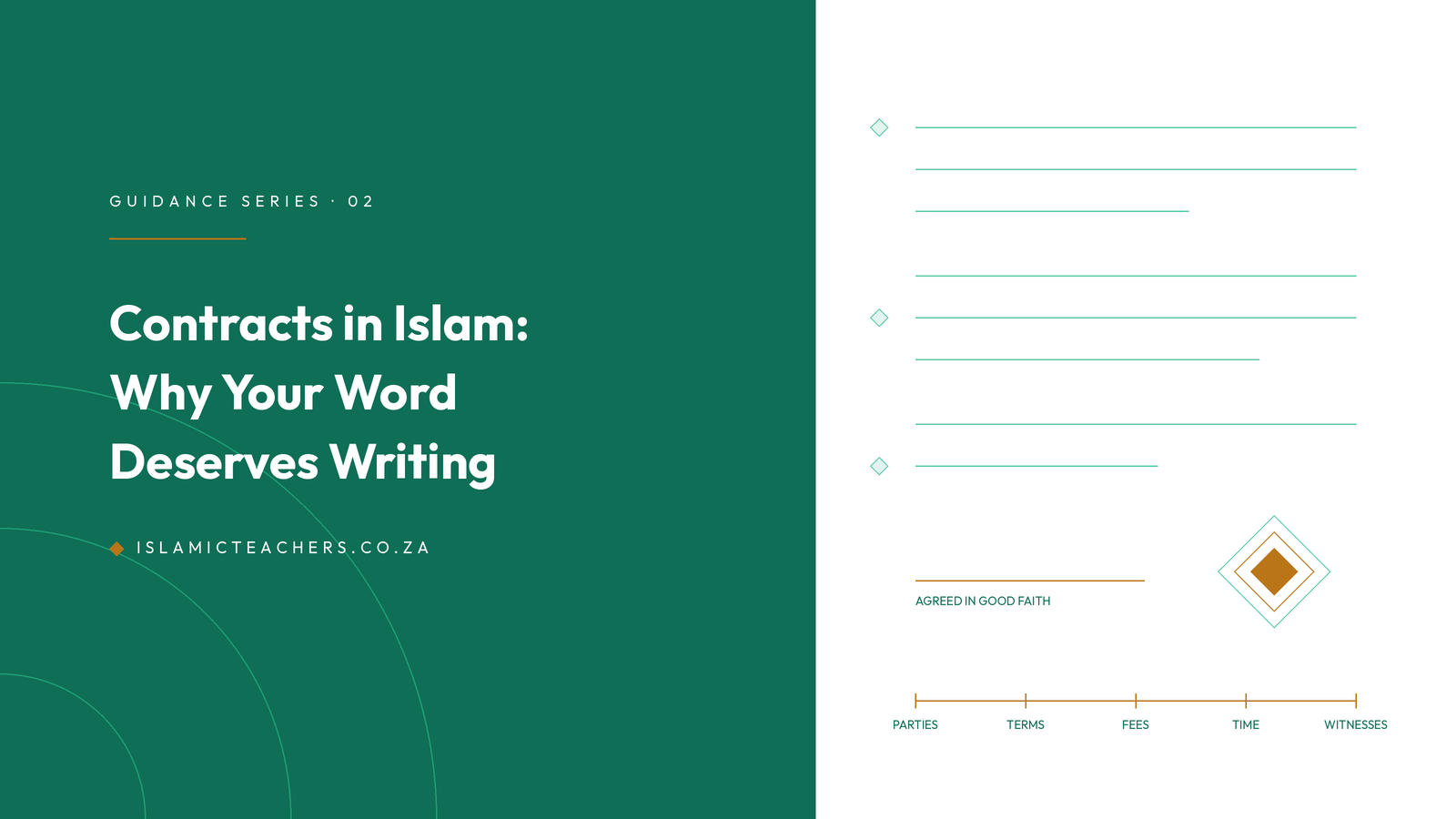
It doesn't need legal language or many pages. One page covering the essentials is enough: who the parties are, what subjects are being taught, the schedule and venue, the fee and when it's paid, what happens when either side misses a lesson, how holidays are handled, and how much notice ends the arrangement. Both sides sign, both keep a copy, and both are freed from ever having to have an awkward conversation about money or missed classes, because the answer was agreed in writing on day one.
A practical step for teachers and parents
If you're a teacher on our platform, put a simple agreement in place with every family. It marks you as a professional and protects your livelihood. If you're a parent, don't hesitate to ask for one; a teacher who offers a clear written agreement is showing you exactly the amanah you want in the person teaching your child.
Browse verified Quran, Arabic and Islamic studies teachers at islamicteachers.co.za/find-a-teacher — free for students and parents.